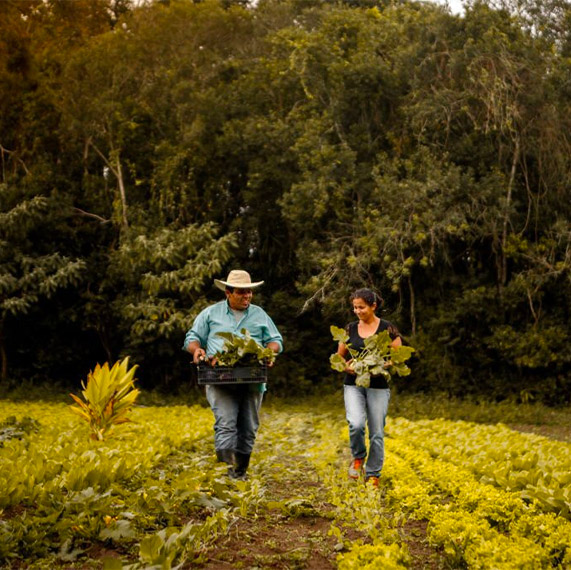


The Cerrado

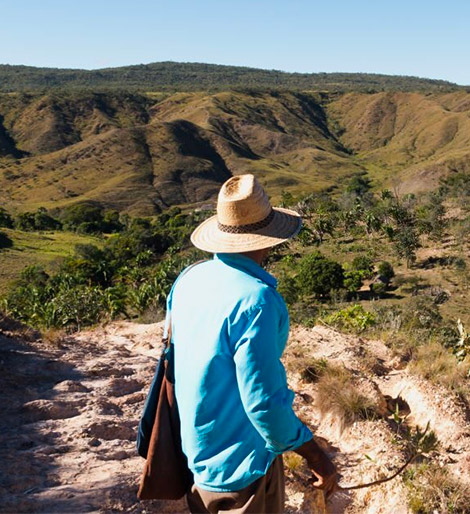
Our focus area within Brazil is the Cerrado region and biome.

This is the world’s oldest biome, occupying over two million square kilometers of Brazil, about 22% of Brazil or more than the size of France, Spain, Germany, Italy and the United Kingdom combined. The Cerrado and
harbors 837 species of birds, 120 reptiles, 150 amphibians, 1,200 fish, 90,000 insects and 199 mammals. Together, they account for 5% of the world’s species and 30% of Brazil’s biodiversity.

Yet less than 10% of the Cerrado is covered by protected areas, and less than 3% of its area is strictly protected, putting various animals at risk of extinction. Additionally, eight of the twelve major watersheds of Brazil initiate in this region, placing it as the most significant in terms of
both human and natural water needs of the country.

However, the Cerrado region is also the largest and most productive in terms of agricultural production,

including cattle, soybeans, and other row crops, putting it under significant and constant risk for further deforestation. Because of land pricing dynamics, farmers often purchase virgin land and incrementally deforest to turn it into productive land, as already productive land has become very expensive in many subregions of the Cerrado. An often-overlooked landform in the region is degraded pasture.

These areas have already been cleared either in an attempt for crop production that did not advance or for cattle production but are nonetheless underutilized and not achieving their full productive potential. It is estimated that there are 72 million hectares of degraded pasture in Brazil, of which 25 million hectares are in the Cerrado. By focusing on this region, we believe we can help to reduce further deforestation in this important biome while making its already deforested lands more efficiently utilized and productive.

The Cerrado
location

Gêneros de Financiamento para o Agronegócio

Mercados de Capitais

O financiamento é competitivo em termos de prazos e estruturas, porém ainda se encontra em estágio inicial de desenvolvimento.

Bancos

Seu foco gira em torno de capital de giro com um prazo limite geralmente curto e taxas altas.

Cooperativas
de crédito agro

Apresenta uma linha de crédito competitiva, mas com volumes reduzidos.

Indústria

As operações por meio de barter são caras, com prazos muitos reduzidos e apresentam pouca transparência para o produtor em relação aos jutros embutidos.
Crédito Subsidiado

Os recursos controlados no agronegócio são insuficientes devido à deterioração do ambiente fiscal no Brasil. Isso resultou na redução proporcional das subvenções do crédito agrícola subsidiado em relação à carteira total de crédito rural. 
Opex

No Plano Safra, metade dos recursos liberados é direcionada para o custeio das atividades agrícolas. Além disso, há opções de recursos livres oferecidos pelos bancos com o prazo do Safra. Outra alternativa é o sistema de barter, em que a indústria financia a compra de insumos com prazo do Safra. Embora as taxas embutidas nos preços dos produtos sejam as mais altas do mercado, a aprovação é extremamente rápida.

Capex

O Plano Safra oferece recursos subsidiados, destinando aproximadamente 30% do montante vai para o investimento. Por outro lado, os recursos livres são disponibilizados pelos Bancos com taxas de mercado e prazos de até 5 anos — geralmente são limitados a clientes com histórico e relacionamento prévio.

Promoting sustainable development in Brazilian agriculture

Explore

Contact

(xx) xxxxx-xxxx
loremipsum@agdev.com.br
Alameda Santos, 1827 conjunto 112 Jardim Paulista São Paulo – SP 01419-002
Edifício Boullevard - Av. Paraíso, 540 - Salas 1 e 2 - Jardim Paraiso Fase I, Luís Eduardo Magalhães - BA, 47850-000